A prospective cohort study examining use barriers experienced by healthcare workers (HCWs) using elastomeric half-mask respirators (EHMRs) during routine patient care at Sinai-Grace Hospital over a 3-month follow-up period — funded by the CDC as the second project in a three-site contract study.
Background & Motivation
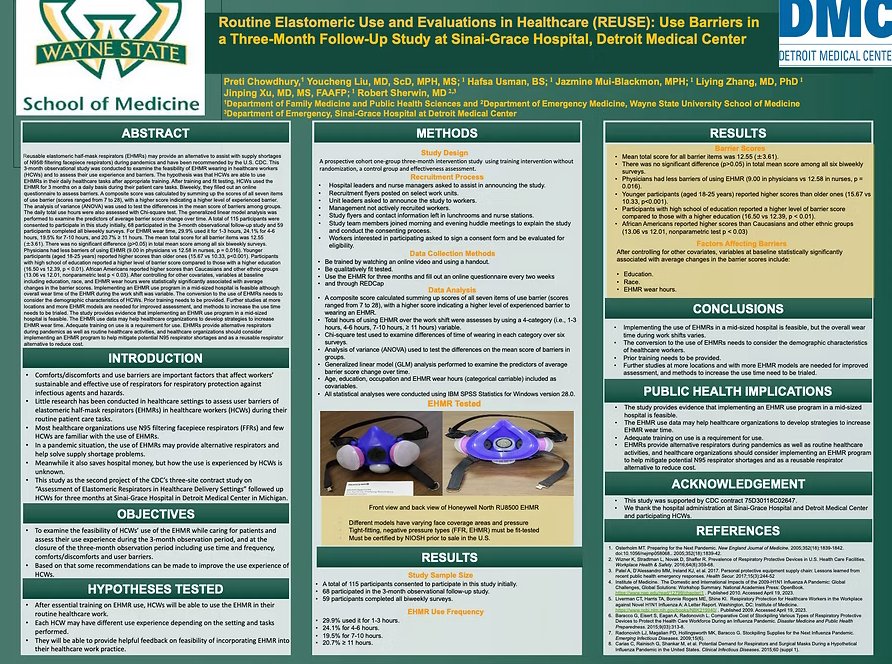
During the COVID-19 pandemic, EHMRs emerged as a viable alternative to N95 filtering facepiece respirators (FFRs), helping address supply shortages while offering equal or superior protection when properly fitted. However, little was known about how HCWs actually experience and use EHMRs in routine clinical settings — including how long they wear them, what barriers they face, and which worker characteristics predict barrier levels.
This study was the second in the CDC's three-site contract study on "Assessment of Elastomeric Respirators in Healthcare Delivery Settings," building on the first EHMR fit-testing (ELFIT) project.
Study Design & Participants
- Prospective cohort one-group three-month intervention study using training intervention without randomization
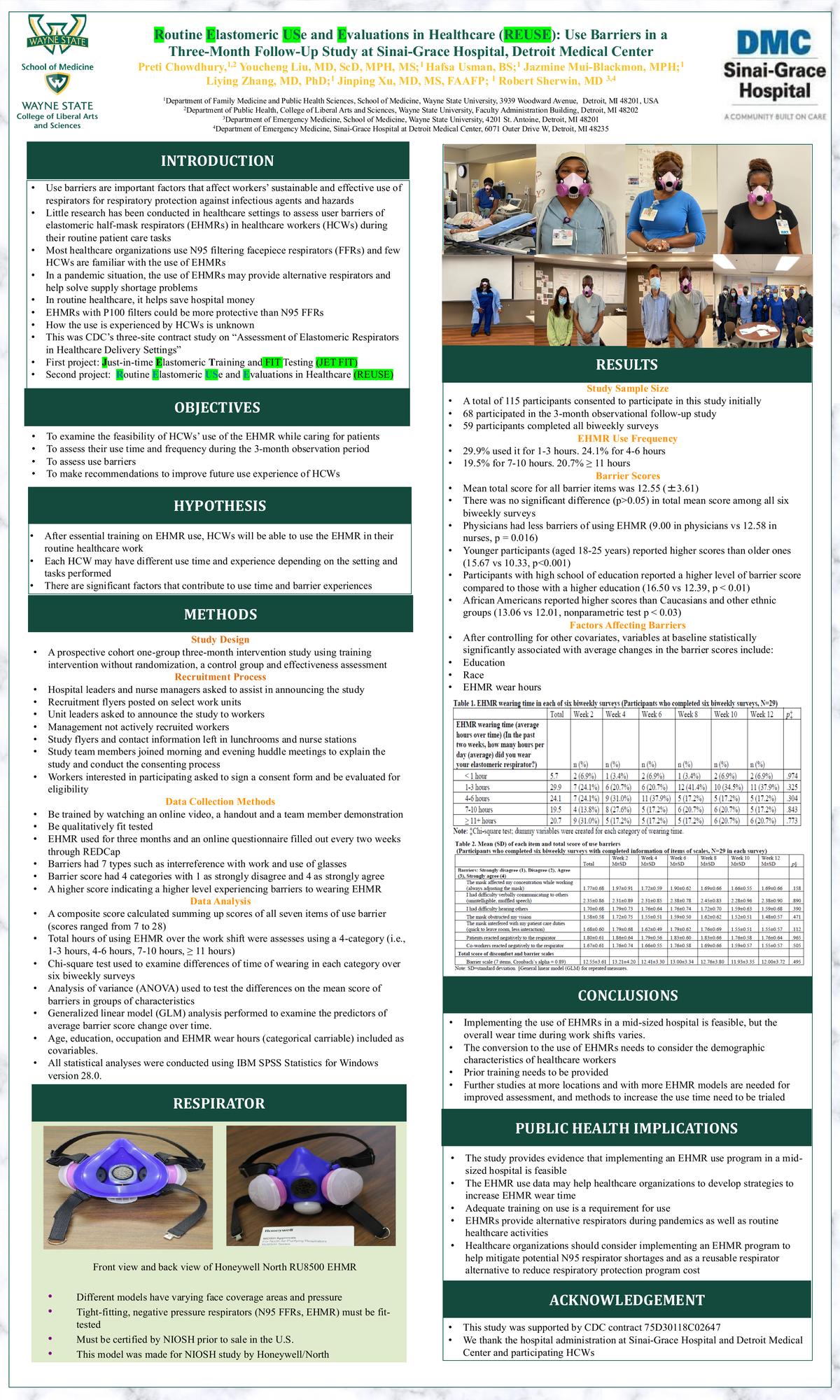
- 115 participants consented; 68 enrolled in 3-month observational follow-up; 59 completed all biweekly surveys
- HCWs trained via online video, handout, and team member demonstration
- EHMR used for 3 months; online questionnaire completed every two weeks through REDCap
- Barrier score assessed across 7 items on a 4-category scale (1=strongly disagree, 4=strongly agree); higher score = more barriers
Key Results
EHMR Use Frequency: 29.9% used it for 1–3 hours, 24.1% for 4–6 hours, 19.5% for 7–10 hours, and 20.7% for ≥11 hours.
Barrier Scores: Mean total score was 12.55 (±3.61). No significant difference in total score across all six biweekly surveys (p>0.05), suggesting barriers remain relatively stable over the 3-month period.
Subgroup Differences:
- Physicians had significantly fewer barriers than nurses (9.00 vs 12.58, p=0.016)
- Younger participants (18–25) reported higher barrier scores than older ones (15.67 vs 10.33, p<0.001)
- Participants with higher education reported higher barrier scores (16.50 vs 12.39, p<0.01)
- African Americans reported higher barrier scores than Caucasians and other ethnic groups (13.06 vs 12.01, p<0.03)
Factors Affecting Barriers (GLM): Education, race, and EHMR wear hours were statistically significantly associated with average changes in barrier scores over time.
Conclusions & Public Health Implications
- Implementing an EHMR use program in a mid-sized hospital is feasible, but overall wear time varies significantly across workers
- EHMRs need to consider the demographic characteristics of HCWs — one-size-fits-all training is insufficient
- Prior training is required; adequate training on use must be mandated
- EHMRs offer an alternative to N95s during pandemics and in routine healthcare — and healthcare organizations should consider them to reduce respiratory protection program costs
- Further studies at more locations and with more EHMR models are needed for improved assessment